Reading the water
Knowing where fish are likely to hold is a skill that transfers between real fishing and many fishing games. This article explains the main clues anglers look for on any body of water.
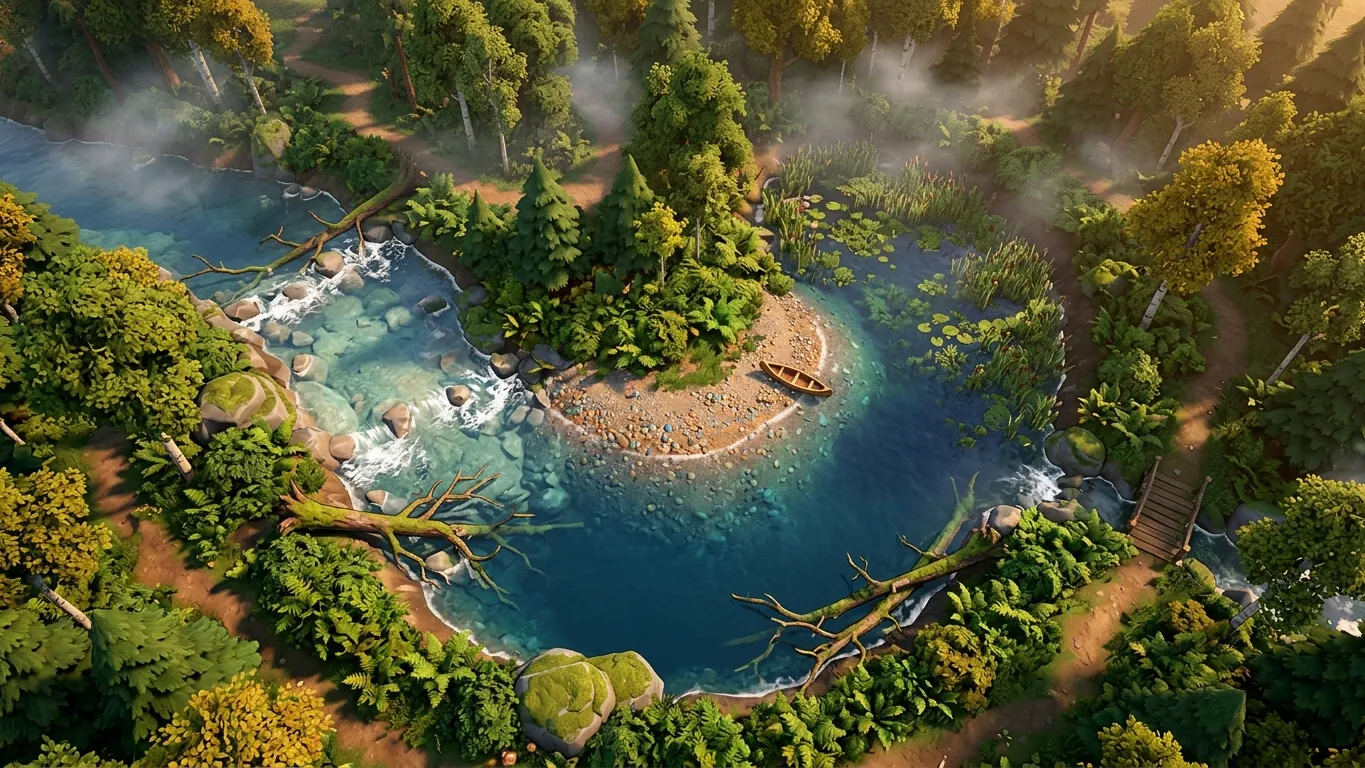
Fish go where they feel safe and fed
Most fish behavior comes down to a few needs: food, shelter from predators and comfortable conditions such as the right temperature and oxygen level. When you look at a lake, river or coastline, ask yourself where those needs are met. That simple question narrows down a large area to a handful of likely spots.
Many fishing games model these ideas, at least in a simplified way. Species may favor certain depths, cover or times of day. Learning to read the water helps in both settings.
Structure and cover
Structure means any change in the underwater landscape: drop-offs, ledges, humps, channels and points. Cover means objects fish can hide in or near: weed beds, fallen trees, docks, boulders and overhanging branches. Predatory fish often wait near cover to ambush prey, and smaller fish shelter there for safety.
When you arrive at a new spot, look for edges. The line where weeds meet open water, where shallow water drops into deep, or where a rocky bank meets sand is often more productive than a uniform area. In games, these edges may be visible on a depth map or shown by changes in water color.
Current in rivers and streams
In moving water, fish usually avoid fighting the strongest current all day. Instead they hold in places where the flow is softer but food drifts past. Look behind rocks, at the tail of pools, along seams where fast and slow water meet and in eddies near the bank.
Casting slightly upstream and letting your bait drift naturally into these zones is a common technique. Many fishing games with rivers reward the same idea, as fish may be placed in calmer pockets beside faster water.
Temperature, light and time of day
Water temperature affects how active fish are and where they go. In warm weather, many species move deeper or into shade during the brightest hours and come shallower in the early morning and evening. In cold weather, they may seek the warmest available water and move more slowly, so a slower presentation can help.
Light also matters. Bright sun can push fish toward cover, while overcast skies may encourage them to roam. Wind can stir up food and push it toward one shore, making that side worth trying. If your fishing game includes weather and a day-night cycle, pay attention to how fish activity changes, as many games build these patterns in.
Putting it together on the water
A practical routine is to start with the most obvious features, such as a point, a weed edge or a deep bend, and fish each one briefly. If nothing happens, change depth, speed or bait before moving on. Keep mental notes of where you found activity and under what conditions, because patterns often repeat.
In real fishing, always respect private property, follow local regulations and pay attention to your own safety around water. In games, take advantage of the freedom to experiment. Either way, reading water is a skill that grows with every session, and it makes time spent fishing far more interesting.
Related articles
 Fishing around the world
An overview of the kinds of fishing waters anglers travel to around the world, from mountain streams to tropical flats, and what each one asks of you.
Read more
 Planning a fishing trip abroad
A step-by-step checklist for planning a fishing trip abroad, covering research, permits, tackle, packing, safety and respect for local waters.
Read more
 Lures vs bait
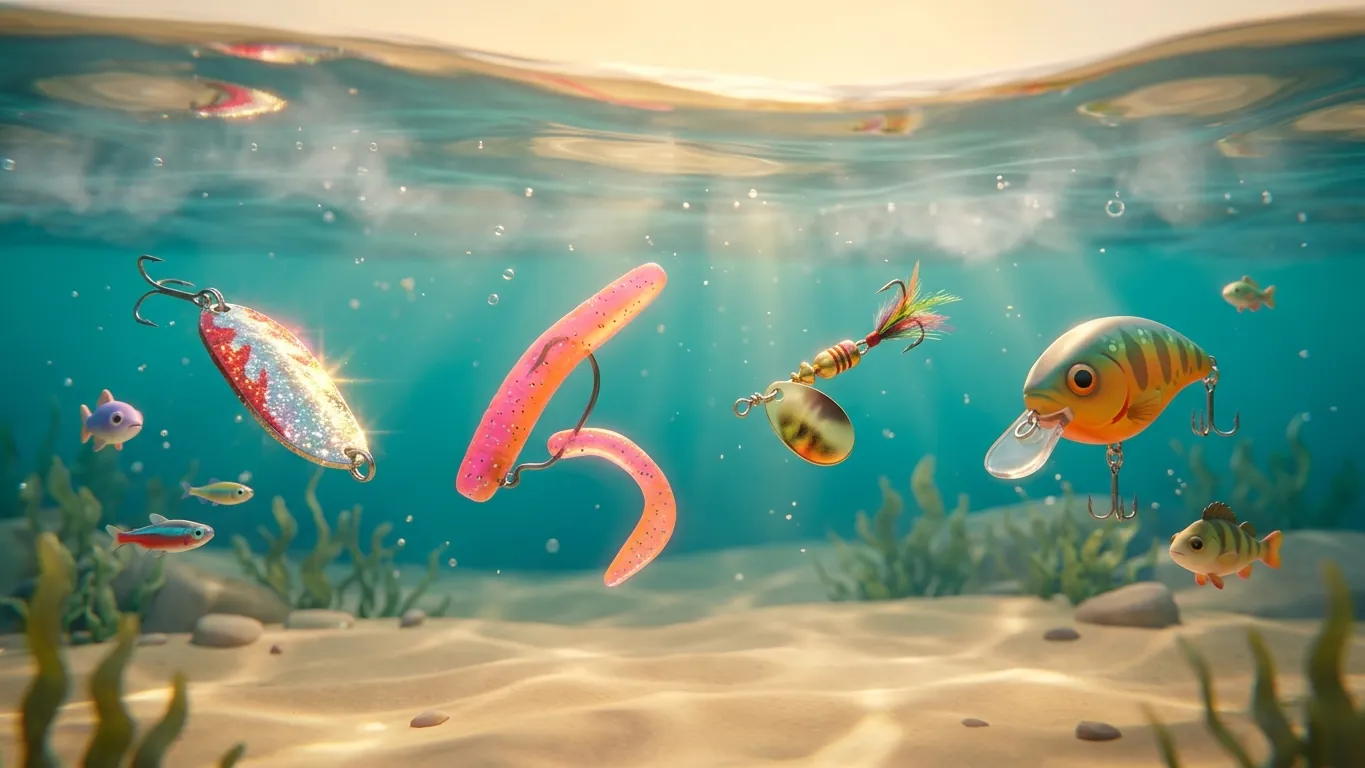
Understand the difference between natural bait and artificial lures, the main lure types and how to choose what to use in real fishing and fishing games.
Read more