Fishing around the world
The world offers an enormous variety of fishing environments, each with its own species, tackle and challenges. This overview describes the main types of waters that draw traveling anglers.
Why anglers travel
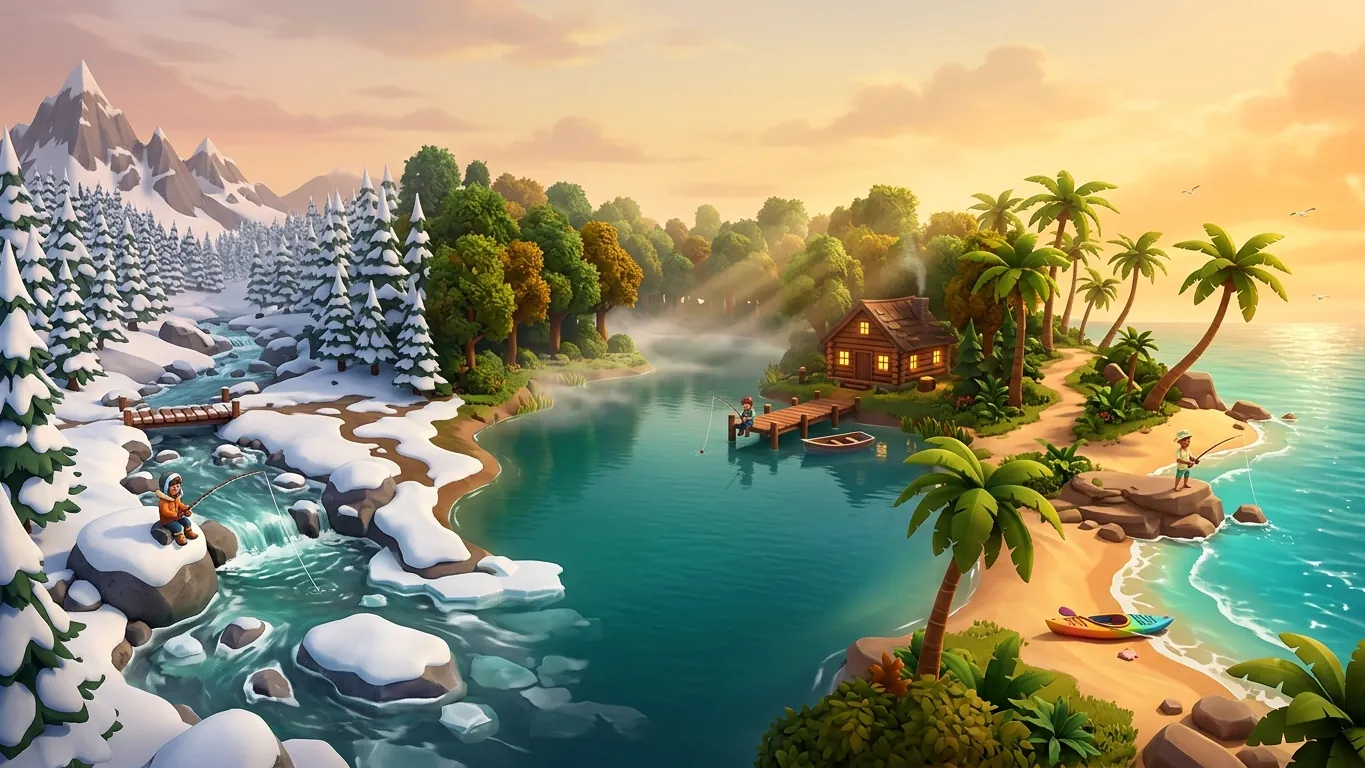
For many people, fishing is a reason to see new places. A trip built around fishing takes you to riverbanks, coastlines and lakes you might never visit otherwise, and it encourages you to slow down and pay attention to the landscape. Each environment also teaches something new about fish behavior and tackle.
Fishing games often reflect this appeal by offering locations inspired by different climates and regions. Whether you travel in person or on screen, understanding the main types of water helps you prepare.
Cold mountain streams and rivers
Clear, cold rivers in mountainous and northern regions are often associated with species that prefer cool, well-oxygenated water. These waters can be fast and rocky, so wading carefully and reading current are important skills. Light tackle and natural-looking presentations are common, and fly fishing is popular in many such places.
The scenery is often spectacular, but conditions can change quickly. Snowmelt, rain and cold temperatures all affect water levels and safety. Local knowledge and up-to-date information are valuable before stepping into any river.
Large lakes and wilderness waters
Big lakes, from forested northern waters to wide reservoirs, offer a mix of shallow bays, weed beds and deep basins. Anglers may fish from shore, from small boats or, in cold regions, through the ice in winter. Species range from smaller panfish to larger predators that roam open water.
On large lakes, wind and weather can make conditions rough. Boat safety, including wearing a flotation device and checking forecasts, is essential. Many remote lakes are only reachable with planning, which is part of their appeal.
Coastlines, surf and tropical flats
Saltwater fishing offers a different experience. Anglers cast from beaches and rocky shores, fish from piers or head offshore in boats. Tides become a major factor, as fish often move with rising and falling water. Saltwater is also hard on gear, so rinsing tackle with fresh water after use is a common habit.
In warm regions, shallow tropical flats attract anglers who enjoy sight fishing, where you spot fish in clear, shallow water before casting. This requires stealth, accurate casts and good sun protection. Coral reefs and mangroves also support rich ecosystems that deserve careful, respectful fishing.
Respecting local rules and environments
Wherever you fish, local rules apply. Many places require a fishing license or permit, and there may be seasons, size limits, catch limits, gear restrictions or protected areas. These rules differ widely between countries and even between nearby waters. Always check the official regulations from the relevant authority before you fish, and if you are unsure, ask local officials or licensed guides.
It is also worth learning about local customs and environmental concerns, such as preventing the spread of invasive species by cleaning boots and gear between waters. Fishing travel is most rewarding when it leaves the places you visit as healthy as you found them.
Related articles
 Planning a fishing trip abroad
A step-by-step checklist for planning a fishing trip abroad, covering research, permits, tackle, packing, safety and respect for local waters.
Read more
 Lures vs bait
Understand the difference between natural bait and artificial lures, the main lure types and how to choose what to use in real fishing and fishing games.
Read more
 What fishing games get right and wrong
An opinion piece on how fishing video games compare with real angling: what they capture well, what they simplify and how each can enrich the other.
Read more