Spoons
Curved metal lures that wobble and flash, useful for covering water and reaching distance.
Choosing between natural bait and artificial lures is one of the first decisions every angler makes. This article explains the strengths of each and how to pick the right option for the conditions.
Natural bait includes worms, insects, small fish, shrimp, dough baits and similar items. Its main strength is that it smells, tastes and often moves like real food. Many fish, especially those that feed by scent, respond well to it. Bait fishing is often relaxed: you cast, wait and watch a float or the rod tip.
Bait can be a good choice for beginners, for slow days when fish are not chasing, and for species that rely heavily on smell. The trade-offs are that it needs to be kept fresh, may attract small fish you are not targeting and is sometimes restricted by local rules. Some waters prohibit live bait or certain bait types, so check regulations before using it.
Artificial lures are designed to imitate prey or to trigger a reaction through movement, flash, color, vibration or sound. Because they are not food, you usually need to work them by retrieving, twitching or jigging. This makes lure fishing more active, and many anglers enjoy the involvement it demands.
Lures allow you to cover a lot of water quickly, which helps locate active fish. They are reusable, easy to store and permitted in many places where live bait is not. On the other hand, they require more technique, and on some days fish may ignore them.
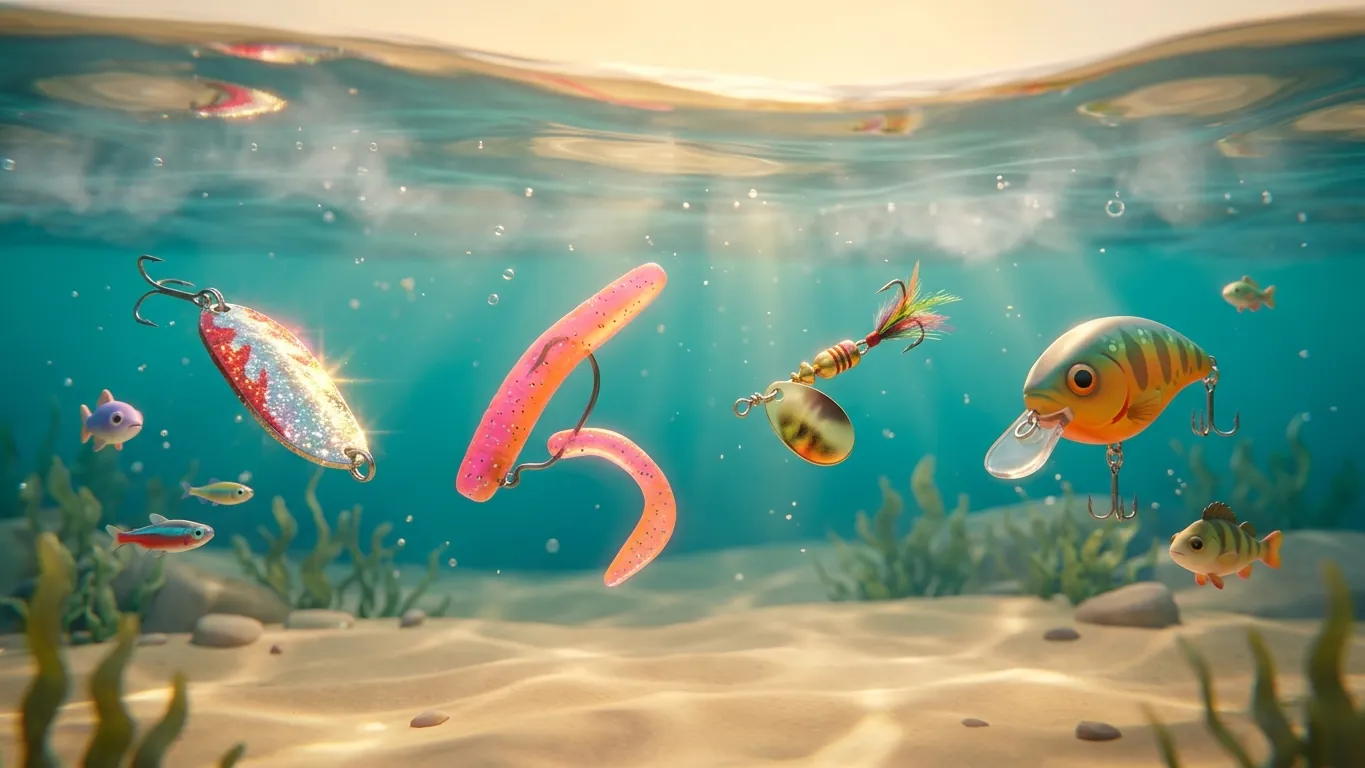
Lure categories appear in both real tackle shops and many fishing games.
Curved metal lures that wobble and flash, useful for covering water and reaching distance.
Lures with a rotating blade that creates flash and vibration as they are retrieved.
Hard-bodied lures with a lip that makes them dive and wobble, often imitating small fish.
Flexible worms, grubs and swimbaits that can be rigged in many ways for a natural movement.
Floating lures worked on the surface to create commotion that can draw dramatic strikes.
Weighted heads with a hook, often dressed with skirts or soft bodies, fished near the bottom.
A few general ideas help when deciding. In clear water, natural colors and subtle movements often work well. In murky water, brighter colors, more vibration or scented baits can help fish find your offering. When fish are active and feeding, faster lures that cover water are useful. When they are sluggish, slower presentations and natural bait may do better.
Depth matters as well. Choose a lure that runs at the depth where fish are holding, or add weight to bait to reach them. Matching the size of your bait or lure to the local food source, sometimes called matching the hatch, is another time-tested approach.
Many fishing games build these principles into their systems. Species may prefer certain baits, respond to specific lure types or react differently depending on retrieval speed and depth. If you are not getting bites, try changing one thing at a time: color, size, depth or speed. Note what works at each location and time of day.
The best approach in both worlds is to stay curious. Carry a small, varied selection, experiment thoughtfully and let the fish tell you what they want.
 What fishing games get right and wrong
An opinion piece on how fishing video games compare with real angling: what they capture well, what they simplify and how each can enrich the other.
Read more
Catch and release habits
Practical catch and release habits for handling fish with care, from preparation to release, plus how these ideas appear in fishing video games.
Read more
 Fishing games for beginners
New to fishing video games? Learn how casting, hooking, reeling and progression usually work, and how to enjoy your first sessions on virtual water.
Read more