Fishing games for beginners
Fishing games turn a quiet hobby into a relaxing and surprisingly deep play experience. This guide explains the core mechanics most of them share so your first sessions feel less confusing.
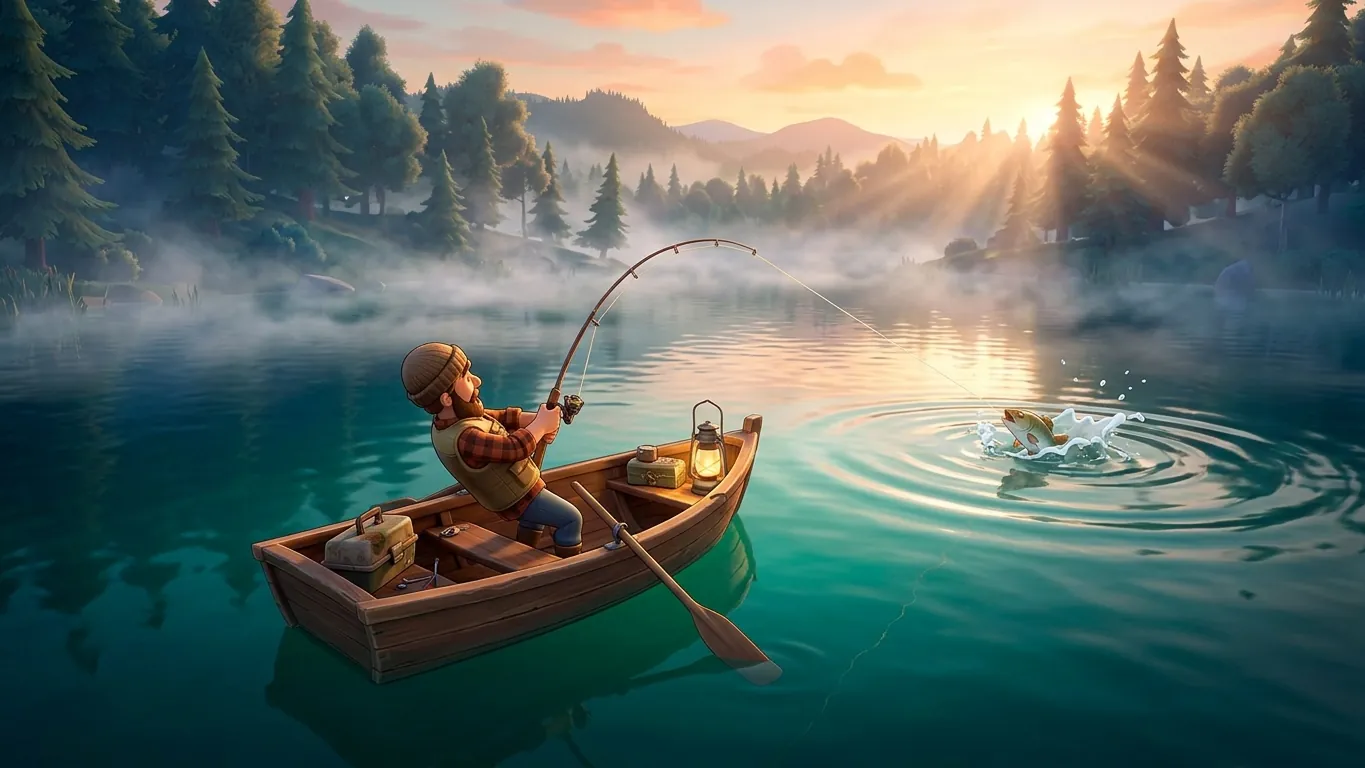
Why fishing games appeal to so many players
Fishing games sit in an interesting space. They can be calm and meditative, letting you sit by a virtual lake and watch the light change, but they can also be tense when a large fish pulls hard and you have to manage your line. Many players enjoy them as a way to unwind, while others treat them as a puzzle of gear, location and timing.
The genre is broad. Some games aim for realism, with detailed tackle, weather and fish behavior. Others are arcade-style, with quick sessions and simple controls. There are also adventure and life-simulation games where fishing is one activity among many. Knowing which kind you are playing helps set your expectations.
Casting: getting your bait to the right place
Almost every fishing game starts with the cast. Usually you aim, hold a button to build power and release to send the line out. Realistic games may also let you choose a casting style or adjust for wind. Arcade games often simplify this to a single press.
The key lesson is that distance alone is rarely the goal. Accuracy matters more. Fish tend to gather near structure such as weed beds, fallen trees, drop-offs and rocks, and placing your bait close to these spots is often more useful than casting as far as possible. Spend your first few sessions practicing controlled casts to specific targets.
Hooking and reeling: the heart of the game
Once a fish takes the bait, most games give you a signal: the float dips, the rod tip twitches, the controller vibrates or a sound plays. Reacting at the right moment sets the hook. Reacting too early or too late may lose the fish.
Reeling is where the challenge usually lives. Many games show line tension in some way, and the basic rule mirrors real fishing: if tension gets too high, the line can snap; if it stays too low, the fish may slip free. When the fish runs, ease off. When it tires, reel steadily. Learning this rhythm is the single most important skill in most fishing games.
Some titles also model drag, a reel setting that lets line slip under pressure. Setting drag sensibly lets the reel absorb sudden runs instead of breaking the line.
Progression, gear and locations
Most fishing games include some kind of progression. You may unlock new rods, reels, lines and lures, gain access to new lakes or coastlines, or complete a collection of species. This loop gives structure to what could otherwise be an open-ended activity.
As a beginner, resist the urge to chase the most advanced gear right away. A balanced, simple setup used well will usually do more than an expensive one used poorly. Focus on one or two locations, learn which species live there and how they behave at different times of day, and expand from there.
A simple plan for your first sessions
These steps can help you settle into almost any fishing game.
- 01
Play the tutorial
Even if it feels slow, the tutorial usually explains the specific signals and controls the game uses.
- 02
Stay in one spot
Pick one starting location and learn its layout, structure and common species before moving on.
- 03
Watch the tension
Pay attention to how the game shows line tension and practice easing off when a fish runs.
- 04
Try different times
If the game has a day-night cycle or weather, fish at different times to see how activity changes.
- 05
Upgrade gradually
Change one piece of gear at a time so you can tell what actually makes a difference.
Related articles
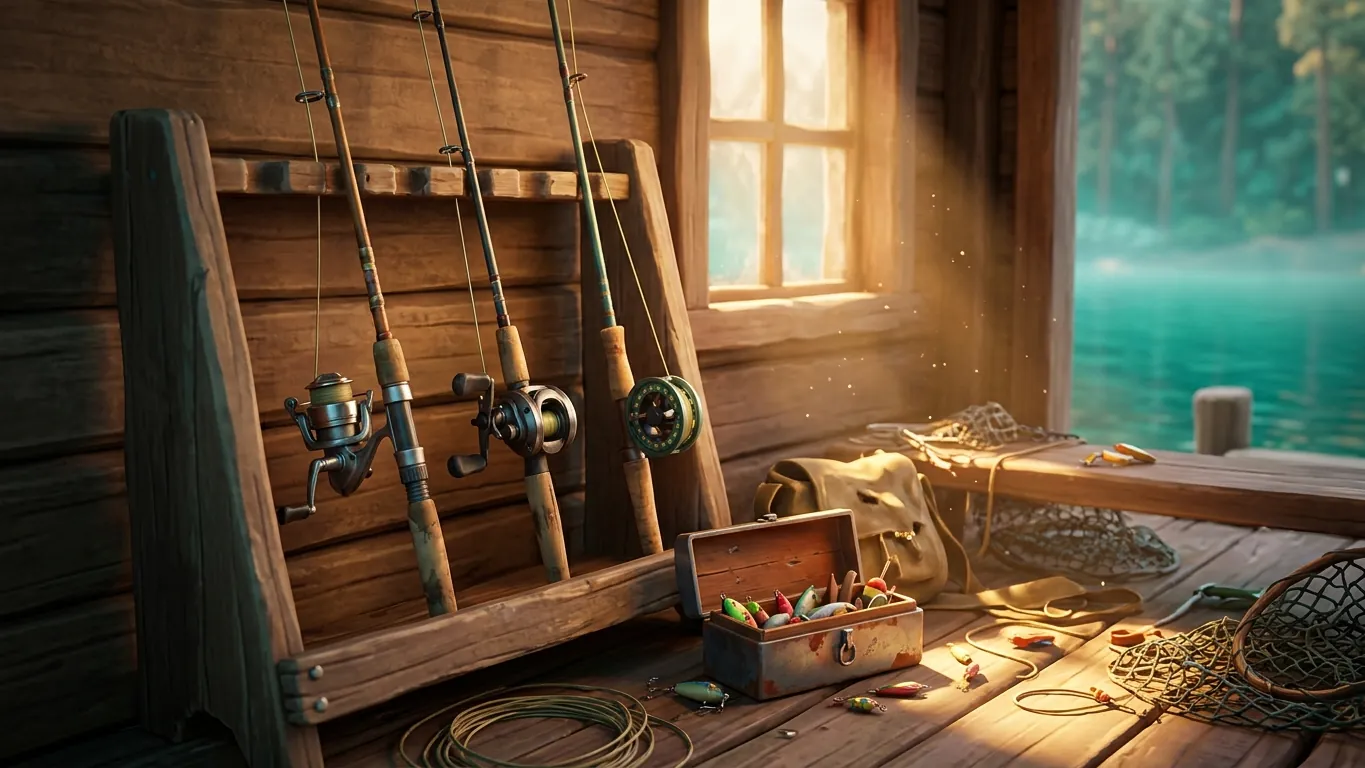 Rods and reels explained
A plain-language guide to fishing rods and reels: length, power, action, spinning and baitcasting reels, and how to choose a balanced first setup.
Read more
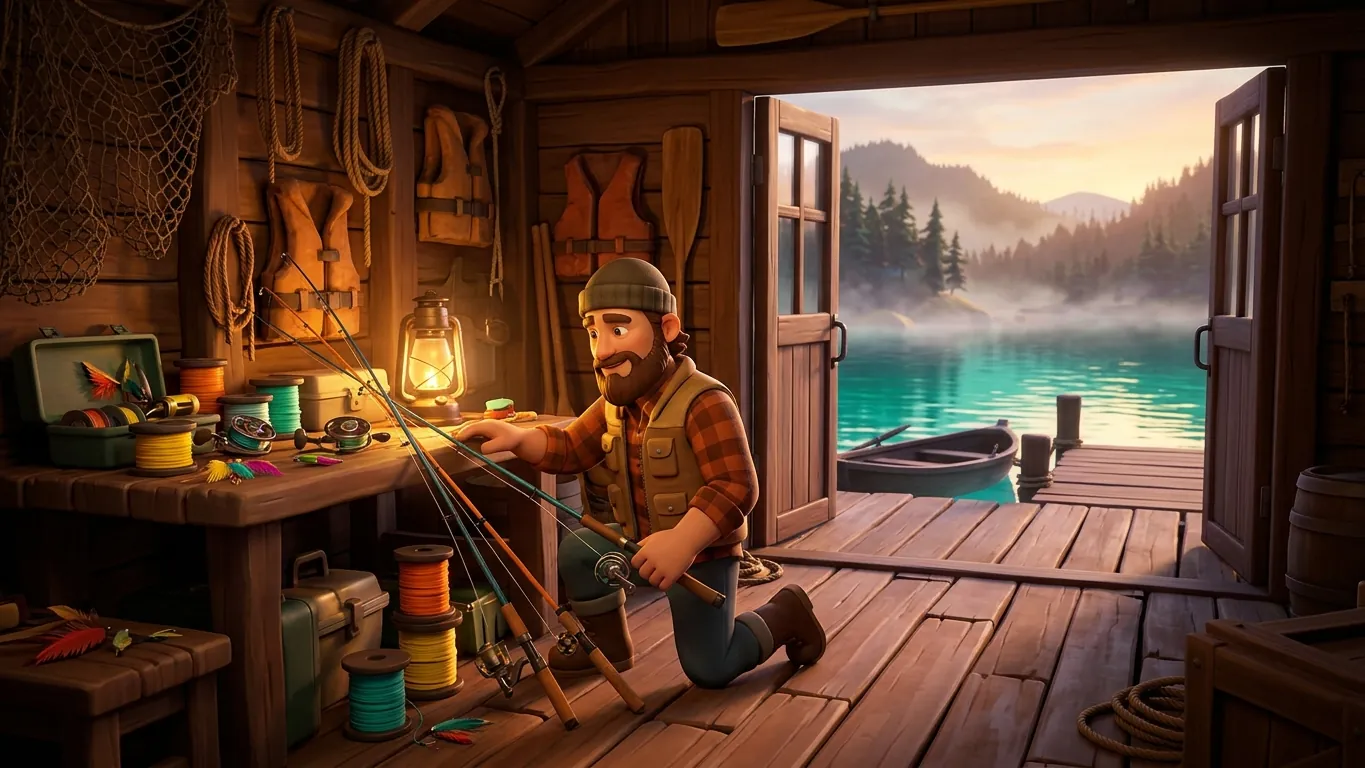 Building a balanced tackle setup in fishing games
Learn how to combine rods, reels, lines and lures in fishing video games so your gear works together and lost fish become less frequent.
Read more
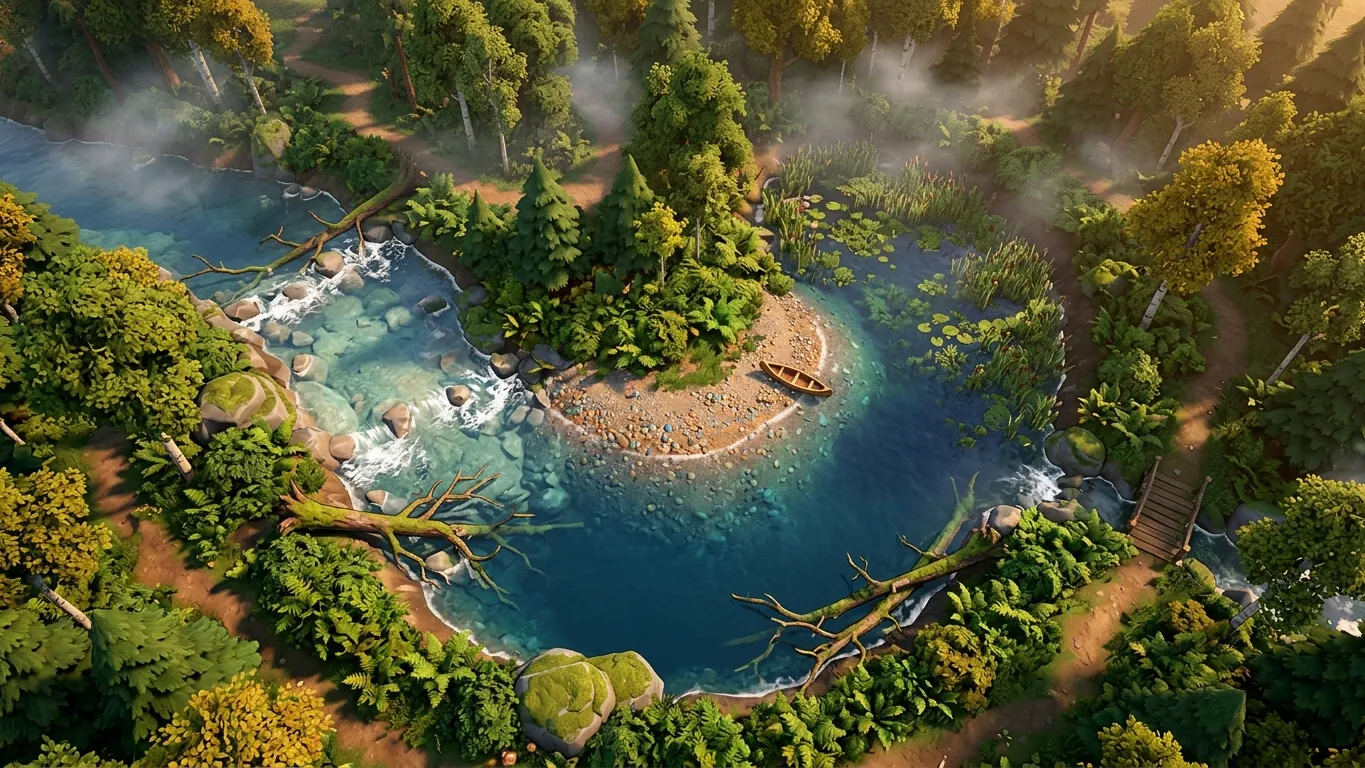 Reading the water
Learn how structure, depth, current, temperature and light affect where fish hold, with tips that apply to real lakes, rivers and fishing games.
Read more